
Real puberty ranges: what the numbers can and cannot tell you
Developmental measurements can describe groups. They cannot predict worth, sexual ability, fertility, masculinity, femininity, or exact adult outcomes.
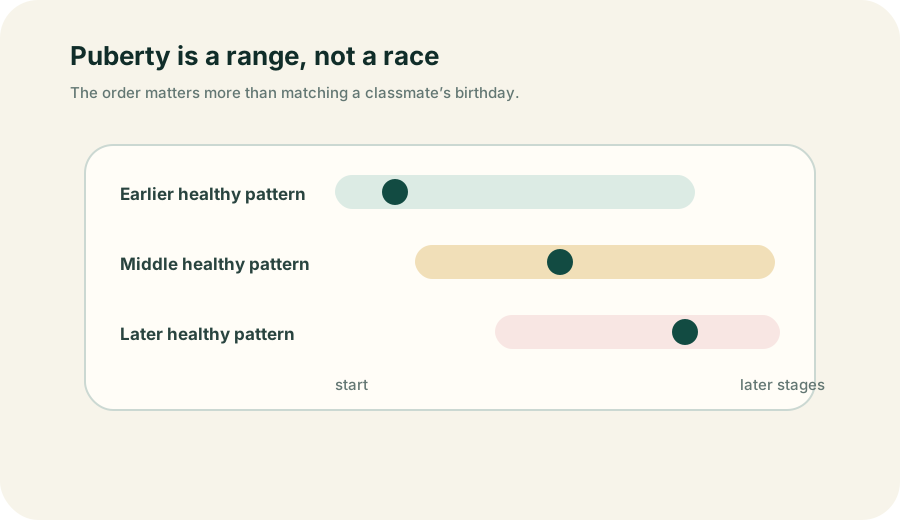
Age is an unreliable shortcut for puberty stage. Two people the same age may be in different healthy stages, and self-measurement is much less reliable than a clinician’s full growth assessment.
What ranges can do
- Show that variation is real
- Describe a study population
- Put one measurement into developmental context
- Help clinicians notice unusual patterns alongside history and examination
What ranges cannot do
- Predict exact adult size
- Score attractiveness or sexual function
- Diagnose hormone levels alone
- Replace a clinician when pain, delayed development, or rapid change exists
Choose the measurement guide
Male puberty sequence
The order of testicle, penis, ejaculation, voice, hair, height, and muscle changes.
Female puberty sequence
The order of breasts, growth, hair, discharge, periods, and later development.
Penis developmental ranges
How studies measure changing bodies and why age-only tables mislead.
Testicle developmental ranges
Why volume is used clinically and why household estimates are imprecise.
When numbers make anxiety worse
How to interrupt repeated measuring and reassurance seeking.
How AmiAverage uses data
Populations, dates, denominators, uncertainty, and editorial limits.