
Start with the question you have
You do not need to decide which kind of person you are before getting a clear body answer.
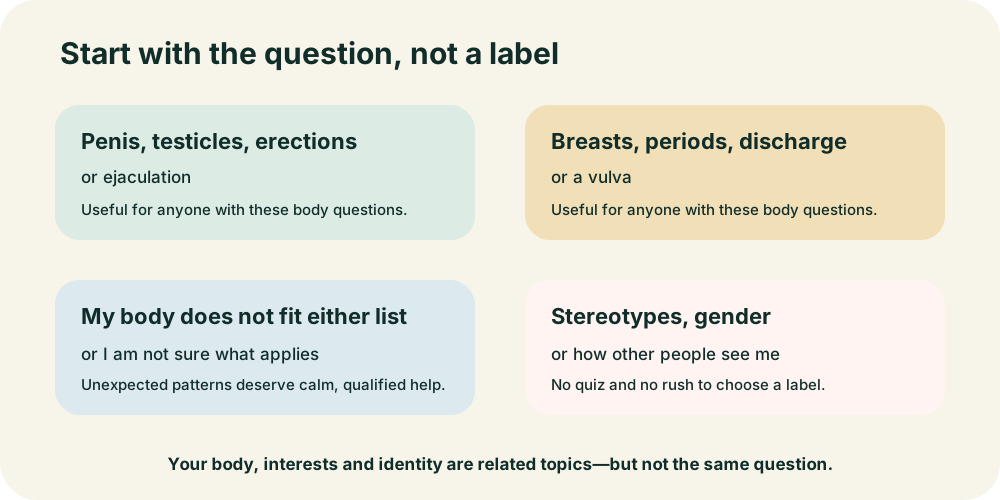
Two healthy people the same age can be at very different stages. Clothes, hobbies and mannerisms do not determine gender. Choose the route that matches your question, and ignore any route that does not apply.
What are you trying to understand?
These routes are based on body changes and the question being asked, not on forcing anyone into an identity.
Penis, testicles, erections, or ejaculation
This route may help whether you are a boy, a girl, trans, nonbinary, intersex, questioning, or do not use a label.
Open this body route →Breasts, periods, discharge, or a vulva
This route is for anyone with these body changes, regardless of gender.
Open this body route →My body does not fit either list, or I am unsure
Unexpected combinations and timing deserve an explanation, not shame or an internet diagnosis.
Find the closest starting point →Stereotypes, gender, or how others see me
Start with the fact that masculine girls and feminine boys are ordinary. Questioning is also allowed, without a quiz or a deadline.
Open this guide →Interests are not a diagnosis
A girl can enjoy things called masculine and still be a girl. A boy can enjoy things called feminine and still be a boy. Interests do not prove that someone is transgender.
Read about stereotypes and gender →Know the urgent exceptions
Sudden severe testicle pain, trouble breathing, fainting with heavy bleeding, or immediate danger needs real-world help rather than more searching.
Find safe help →